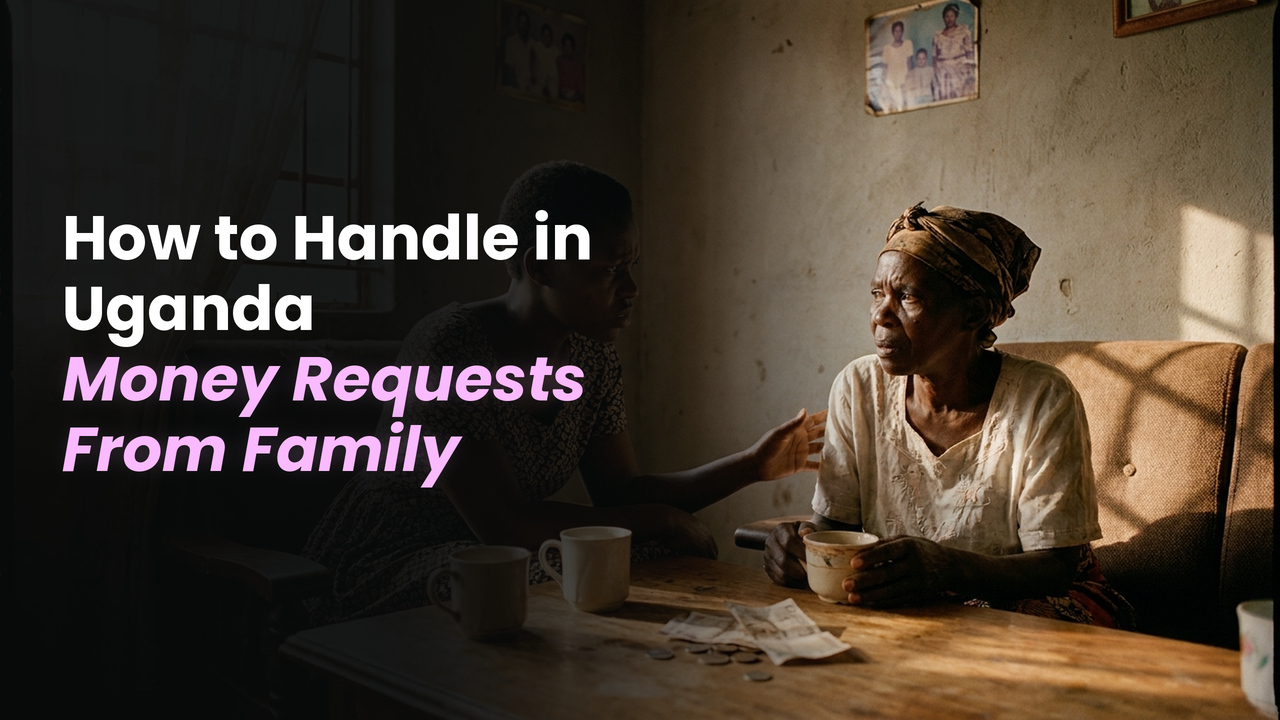
Yes, it is extremely common. In Uganda, extended family financial obligations are deeply embedded in social culture — funerals, medical emergencies, school fees, and business setbacks are frequently managed communally. This means many salaried workers and small business owners regularly receive requests from relatives or close friends. While this reflects strong community bonds, it can create significant financial pressure if not managed thoughtfully, particularly for individuals trying to build their own financial stability.
Be honest but kind. Instead of a flat refusal, explain your financial situation briefly: 'I'm managing my own commitments right now and I'm not in a position to help.' You can also offer alternatives — connecting them to a SACCO, a digital lender, or a community group — without giving money yourself. Setting a clear and consistent boundary is less damaging to relationships in the long run than repeatedly giving money you cannot afford, which often leads to resentment and financial strain.
Frame boundaries around your financial responsibilities, not your willingness to help. Let family members know what you are managing — rent, children's fees, loan repayments — so the boundary is grounded in reality rather than unwillingness. You can also set a personal rule, such as only giving what you can afford to lose rather than lend, and communicate it consistently. The goal is not to appear wealthy and withholding, but to be honest about your capacity so expectations are realistic.
A practical framework: only give what you would be comfortable never seeing returned. If you cannot afford to give it as a gift, don't give it as a loan — most informal family loans are never repaid. Prioritise genuine emergencies — medical costs, funeral contributions — over requests that could be addressed through other means. Also consider your own financial buffers: if giving this amount would leave you without an emergency fund or unable to pay your own obligations, that is a signal to decline.
Yes, significantly. Regularly redirecting money toward family requests can make it nearly impossible to save consistently, build an emergency fund, or invest. Over time, this can trap you in a cycle where you are always helping others but never building stability for yourself. Being clear about your own financial goals — and protecting the savings set aside for them — is not selfish. You cannot consistently support others if you are financially vulnerable yourself.
First, assess whether it is a genuine emergency or a recurring pattern. For genuine emergencies, give what you can afford without depleting your own emergency fund, and be upfront that it is a gift, not a loan, to avoid awkwardness later. For recurring requests, have an honest conversation about whether the person needs help accessing a more structured source of credit or financial guidance. Avoid lending money to friends who already owe you or other people — this rarely ends well for the relationship.
In most cases, if you decide to help, it is healthier to treat it as a gift rather than a loan. Informal family loans are rarely repaid on time or in full, and chasing repayment can damage relationships more than the original request. Only 'lend' if you can genuinely afford not to be repaid and won't feel resentful if it doesn't come back. For larger amounts, directing family members to a SACCO or digital lender is often a better long-term solution than personal lending.