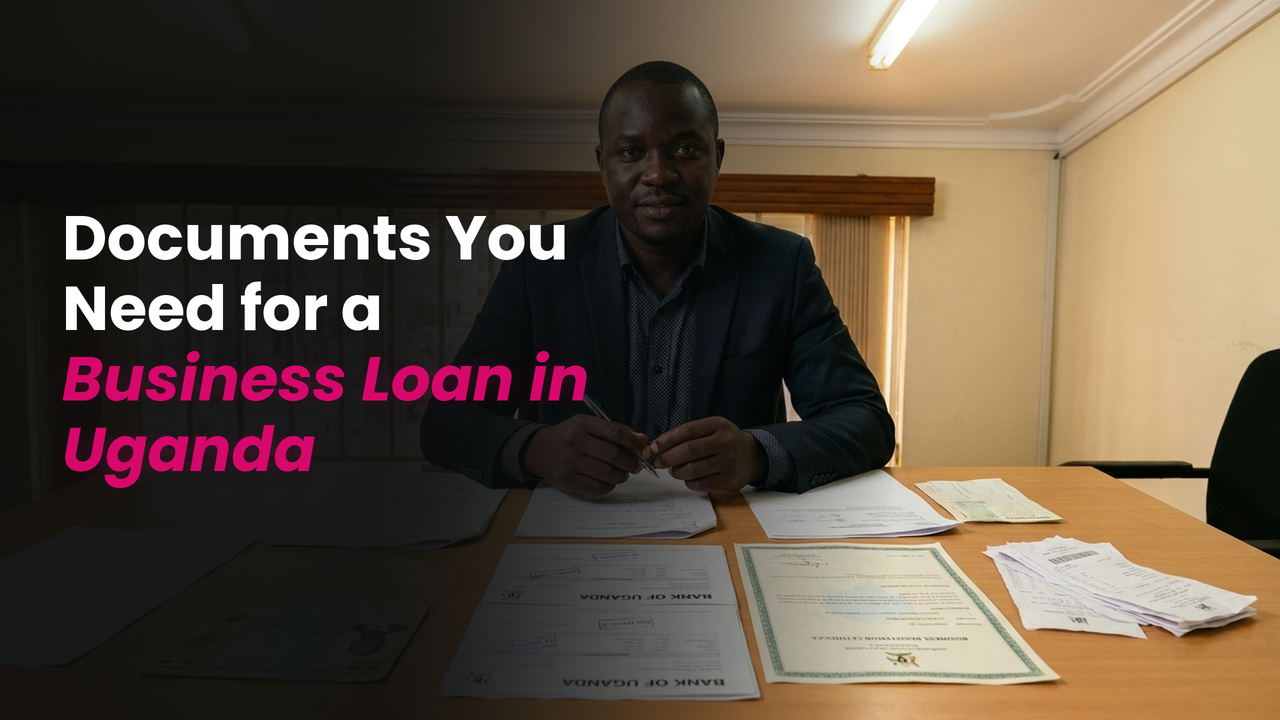
Commercial banks in Uganda typically require a valid national ID or passport, a Certificate of Registration or Incorporation, audited financial statements or business bank statements for the last 12 months, a business plan, proof of collateral (property title, logbook, or fixed assets), and sometimes a guarantor. Requirements vary between banks, so it is worth calling ahead to confirm exactly what your branch needs before submitting an application.
Yes, in some cases. Digital lenders like Fido do not require business registration documents — they assess your eligibility based on your national ID, mobile money history, and phone usage patterns. SACCOs may also lend to informal traders based on membership and savings records. However, if you want to borrow from a commercial bank, you will almost always need at least a Certificate of Registration or proof of formal business activity.
Not necessarily. Most digital lenders in Uganda, including Fido, do not require formal bank statements. Instead, they use mobile money transaction history, which is more accessible to small traders who operate through MoMo rather than traditional bank accounts. This makes digital lending particularly suited to the informal sector, where many businesses generate real income but do not maintain formal banking relationships.
For most lenders in Uganda, a valid National Identification Authority (NIA) card is the primary accepted ID. Some lenders also accept a valid passport or driver's licence. Digital lenders typically require only your national ID, while banks may request additional documents such as a director's ID for company loans. Make sure your ID is not expired and that your name matches across all documents to avoid delays in processing.
Banks require a full documentation package: registration certificates, audited accounts, collateral documents, and sometimes a guarantor. This process can take weeks. Digital lenders like Fido require only a national ID and your mobile number — the entire application is completed on your phone in minutes. The tradeoff is loan size: banks can lend larger amounts, while digital lenders are faster and more accessible for smaller, short-term business needs.
For commercial bank loans above a certain threshold, yes — audited financial statements are usually required to demonstrate business viability and cash flow. For SACCOs, this requirement varies. For digital lenders like Fido, audited accounts are not needed at all. If you are borrowing for small-scale business needs and do not have a formal accountant, a digital lender is likely your most accessible starting point while you build the financial records that banks look for.
Submitting an incomplete application to a bank or SACCO will typically result in rejection or a request to resubmit with the missing items, which delays the process by days or weeks. Digital lenders are more forgiving — if you meet their basic criteria (valid ID, active mobile number, mobile money history), missing formal business documents won't block your application. Start with a digital lender to access capital now, and work on building the documentation trail banks require for future larger loans.